
solo para uso en investigación
Mitoxantrone Topoisomerase inhibidor
Cat. No.S1889
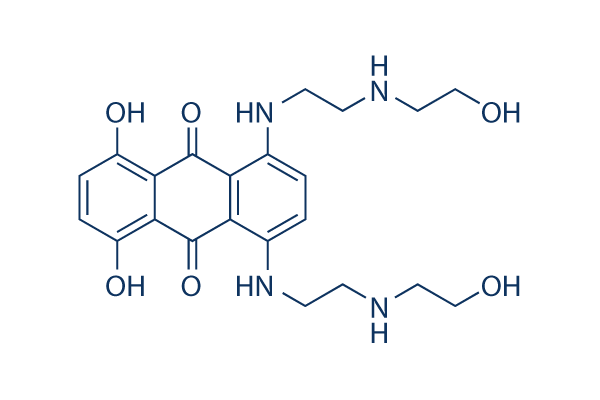
Estructura química
Peso molecular: 444.48
Control de calidad
| Dianas relacionadas | CDK HSP PD-1/PD-L1 ROCK Wee1 DNA/RNA Synthesis Microtubule Associated Ras KRas Aurora Kinase |
|---|---|
| Otros Topoisomerase Inhibidores | Camptothecin (CPT) Betulinic acid Beta-Lapachone (S)-10-Hydroxycamptothecin Amonafide Voreloxin (SNS-595) hydrochloride Ellagic acid Cu(II)-Elesclomol Hydroxy Camptothecine Rubitecan |
Cultivo celular, tratamiento y concentración de trabajo
| Líneas celulares | Tipo de ensayo | Concentración | Tiempo de incubación | Formulación | Descripción de la actividad | PMID |
|---|---|---|---|---|---|---|
| L1210 cell | Cytotoxic assay | 48 h | Cytotoxic potency required to inhibit L1210 cell growth by 50% after cell drug contact for 48 hrs, IC50=4e-05 μM | |||
| human HL60 cells | Cytotoxic assay | 48 h | Cytotoxicity against human HL60 cells after 48 hrs by MTT assay, GI50=0.33 nM | |||
| MDA435/LCC6 cells | Proliferation assay | Antiproliferative activity against MDA435/LCC6 cells by ELISA, IC50=0.35 nM | ||||
| A2780-cell | Growth inhibition assay | Concentration required to inhibit A2780-cell growth by 50%, IC50=0.55 μM | ||||
| A2780 cell | Cytotoxic assay | 96 h | Cytotoxic potency required to inhibit A2780 cell growth by 50% after cell drug contact for 96 hrs, IC50=0.55 nM | |||
| G-361 cell | Cytotoxic assay | Cytotoxic potency required to inhibit G-361 cell growth by 50%, IC50=0.65 nM | ||||
| HL60 human leukemia cell | Cytotoxic assay | 72 h | Compound was tested in vitro for cytotoxicity against HL60 human leukemia cell line (72 hr exposure to compound), IC50=0.81 nM | |||
| human HL60 cells | Proliferation assay | 72 h | Antiproliferative activity against human HL60 cells after 72 hrs by SRB assay, IC50=2.5 nM | |||
| human K562 cells | Cytotoxic assay | 5 days | Cytotoxicity against human K562 cells after 5 days by XTT assay, IC50=2.6 nM | |||
| CH1-cell | Growth inhibition assay | Concentration required to inhibit CH1-cell growth by 50%, IC50=2.65 nM | ||||
| uterine sarcoma MES-SA cells | Cytotoxic assay | In vitro cytotoxicity against uterine sarcoma MES-SA cells, IC5=3 nM | ||||
| MES-SA cells | Proliferation assay | 72 h | Antiproliferative activity against MES-SA cells by MTT assay after 72 hrs, IC50=3 nM | |||
| A549 cells | Function assay | Tested for inhibitory activity against human tumor cell line A549 (a non small, drug resistant cell line that does not produce P-glycoprotein) of lung carcinoma using sulforhodamine B assay, IC50=3 nM | ||||
| human LoVo cancer cell | Cytotoxic assay | 144 h | Cytotoxicity against human LoVo cancer cell line was determined after 144 hr, IC50=3.3 nM | |||
| P388 cells | Proliferation assay | Antiproliferative activity against P388 cells by ELISA, IC50=4.3 nM | ||||
| MCF-7 | Growth inhibition assay | In vitro inhibition of tumor cell growth in the human mammary tumor MCF-7 system, IC50=5 nM | ||||
| murine L1210 sensitive cell line | Function assay | Anti-tumor activity against murine L1210 sensitive cell line by using MTT assay, IC50=5 nM | ||||
| human Daudi cells | Proliferation assay | 72 h | Antiproliferative activity against human Daudi cells after 72 hrs by MTT assay, IC50=5 nM | |||
| SKOV-3-cell | Growth inhibition assay | Concentration required to inhibit SKOV-3-cell growth by 50%, IC50=5.3 nM | ||||
| human cell line DU145 | Cytotoxic assay | In vitro Cytotoxic activity of compound in comparison with reference compounds in human cell line DU145, IC50=5.6 nM | ||||
| human HCT116 cancer cell line | Cytotoxic assay | 144 h | Cytotoxicity against human HCT116 cancer cell line was determined after 144 hr, IC50=5.8 nM | |||
| OVCAR-3 cell | Function assay | Inhibitory activity against OVCAR-3 cell line, IC50=5.8 nM | ||||
| human MES-SA cells | Proliferation assay | 72 h | Antiproliferative activity against human MES-SA cells after 72 hrs by MTT assay, IC50=6 nM | |||
| human PC3 cancer cell | Cytotoxic assay | 144 h | Cytotoxicity against human PC3 cancer cell line was determined after 144 hr, IC50=7 nM | |||
| MDR cell line K562R | Cytotoxic assay | 72 h | Compound was tested in vitro for cytotoxicity against MDR cell line K562R (72 hr exposure to compound), IC50=7.06 nM | |||
| WiDr cell | Function assay | Activity against human colon carcinoma sensitive WiDr cell line, IC50=8.1 nM | ||||
| MXF7 breast cell line | Function assay | Antitumor activity against human mammary carcinoma sensitive MXF7 breast cell line, IC50=8.7 nM | ||||
| HT-29 cell | Cytotoxic assay | In vitro cytotoxicity was tested against human colon adenocarcinoma HT-29 cell line, IC50=0.01 μM | ||||
| CHO cell line xrs6 | Cytotoxic assay | Cytotoxicity against CHO cell line xrs6, IC50=0.01 μM | ||||
| human HL60 cells | Growth inhibition assay | Growth inhibition of human HL60 cells by Almar blue assay, GI50=0.01 μM | ||||
| HT-29 cells | Cytotoxic assay | Cytotoxicity is determined as the concentration required to inhibit the growth of human colon adenocarcinoma (HT-29) cell line, IC50=0.01 μM | ||||
| human Ishikawa cells | Proliferation assay | 72 h | Antiproliferative activity against human Ishikawa cells after 72 hrs by MTT assay, IC50=0.01 μM | |||
| HEK293 cells | Cytotoxic assay | 72 h | Cytotoxicity against HEK293 cells after 72 hrs by MTT assay, IC50=0.01 μM | |||
| human MKN45 cancer cell | Cytotoxic assay | 144 h | Cytotoxicity against human MKN45 cancer cell line was determined after 144 hr, IC50=0.012 μM | |||
| human LoVo cancer cell | Cytotoxic assay | 1 h | Cytotoxicity against human LoVo cancer cell line was determined after 1 hr, IC50=0.012 μM | |||
| human FM3 cells | Proliferation assay | 72 h | Antiproliferative activity against human FM3 cells after 72 hrs by MTT assay, IC50=0.013 μM | |||
| human HL60 cells | Cytotoxic assay | 48 h | Cytotoxicity against human HL60 cells assessed as cell viability after 48 hrs by celltiter-blue assay, IC50=0.016 μM | |||
| SK-BR-3 cells | Function assay | The IC50 value was measured on human breast cancer cell line SK-BR-3, IC50=0.016 μM | ||||
| human small-cell lung cancer (SCLC) | Cytotoxic assay | Cytotoxicity against human small-cell lung cancer (SCLC), IC50=0.02 μM | ||||
| human HCT116 cells | Cytotoxic assay | 72 h | Cytotoxicity against human HCT116 cells assessed as inhibition of cell proliferation after 72 hrs by MTT assay, IC50=0.022 μM | |||
| human HCT116 cells | Proliferation assay | 72 h | Antiproliferative activity against human HCT116 cells after 72 hrs by MTT assay, IC50=0.025 μM | |||
| A0375 cells | Function assay | Inhibitory activity against human tumor cell line A0375 melanoma, IC50=0.026 μM | ||||
| NCI-H460 cells | Cytotoxic assay | 48 h | Cytotoxicity against human NCI-H460 cells after 48 hrs by resazurin dye assay, EC50=0.03 μM | |||
| CCRF-CEM cells | Cytotoxic assay | 48 h | Cytotoxicity against human CCRF-CEM cells assessed as cell viability after 48 hrs by celltiter-blue assay, IC50=0.036 μM | |||
| human HeLa cells | Proliferation assay | 72 h | Antiproliferative activity against human HeLa cells after 72 hrs by MTT assay, IC50=0.044 μM | |||
| human NCI60 cells | Function assay | 48 h | Antitumor activity against human NCI60 cells after 48 hrs by SRB assay, GI50=0.04786 μM | |||
| UA375 cells | Function assay | Tested for inhibitory activity against human tumor cell line UA375 of melanoma using sulforhodamine B assay, IC50=0.048 μM | ||||
| HT1080 cells | Function assay | Inhibitory activity against human tumor cell line HT1080, IC50=0.066 μM | ||||
| human MES-SA/Dx5 cells | Proliferation assay | 72 h | Antiproliferative activity against human MES-SA/Dx5 cells after 72 hrs by MTT assay, IC50=0.073 μM | |||
| human RKOp27 cells | Proliferation assay | 48 h | Antiproliferative activity against human RKOp27 cells after 48 hrs, EC50=0.09 μM | |||
| human HeLa cells | Cytotoxic assay | 96 h | Cytotoxicity against human HeLa cells expressing telomerase after 96 hrs by MTT assay, IC50=0.1 μM | |||
| human SKOV3 cells | Proliferation assay | 48 h | Antiproliferative activity against human SKOV3 cells after 48 hrs, EC50=0.12 μM | |||
| human NCI-H460 cells | Proliferation assay | 48 h | Antiproliferative activity against human NCI-H460 cells after 48 hrs, EC50=0.12 μM | |||
| A549 cells | Cytotoxic assay | In vitro cytotoxic activity against human lung A549 cell line ( standard deviation in parenthesis), IC50=0.3 μM | ||||
| SF268 cells | Proliferation assay | 48 h | Antiproliferative activity against human SF268 cells after 48 hrs, EC50=0.32 μM | |||
| human KB/HeLa cells | Proliferation assay | 48 h | Antiproliferative activity against human KB/HeLa cells after 48 hrs, EC50=0.36 μM | |||
| K562 cells | Growth inhibition assay | 72 h | Growth inhibition of human K562 cells after 72 hrs by MTS method, IC50=0.42 μM | |||
| MDA-MB-231 cells | Proliferation assay | Antiproliferative activity against human MDA-MB-231 cells, IC50=0.96 μM | ||||
| SF268 cells | Cytotoxic assay | 48 h | Cytotoxicity against human SF268 cells after 48 hrs by SRB assay, GI50=0.97 μM | |||
| MDA435/LCC6 cells | Proliferation assay | Antiproliferative activity against multidrug resistant MDA435/LCC6 cells by ELISA, IC50=1.442 μM | ||||
| U937 cells | Cytotoxic assay | Cytotoxicity against human U937 cells by MTT assay, IC50=6.2 μM | ||||
| A549 cells | Cytotoxic assay | Cytotoxicity against human A549 cells by MTT assay, IC50=7.8 μM | ||||
| HT-29 cell line | Proliferation assay | Inhibitory concentration of compound against proliferation of colon carcinoma HT-29 cell line, IC50=8 μM | ||||
| HepG2 cells | Proliferation assay | 48 h | Antiproliferative activity against human HepG2 cells after 48 hrs by MTT assay, IC50=11.05 μM | |||
| Haga clic para ver más datos experimentales de líneas celulares | ||||||
Información química, almacenamiento y estabilidad
| Peso molecular | 444.48 | Fórmula | C22H28N4O6 |
Almacenamiento (Desde la fecha de recepción) | |
|---|---|---|---|---|---|
| Nº CAS | 65271-80-9 | Descargar SDF | Almacenamiento de soluciones madre |
|
|
Solubilidad
|
In vitro |
DMSO
: 88 mg/mL
(197.98 mM)
Water : Insoluble Ethanol : Insoluble |
Calculadora de Molaridad
|
In vivo |
|||||
Calculadora de formulación in vivo (Solución clara)
Paso 1: Introduzca la información a continuación (Recomendado: Un animal adicional para tener en cuenta la pérdida durante el experimento)
Paso 2: Introduzca la formulación in vivo (Esto es solo la calculadora, no la formulación. Por favor, contáctenos primero si no hay una formulación in vivo en la sección de Solubilidad.)
Resultados del cálculo:
Concentración de trabajo: mg/ml;
Método para preparar el líquido maestro de DMSO: mg fármaco predissuelto en μL DMSO ( Concentración del líquido maestro mg/mL, Por favor, contáctenos primero si la concentración excede la solubilidad del DMSO del lote del fármaco. )
Método para preparar la formulación in vivo: Tomar μL DMSO líquido maestro, luego añadirμL PEG300, mezclar y clarificar, luego añadirμL Tween 80, mezclar y clarificar, luego añadir μL ddH2O, mezclar y clarificar.
Método para preparar la formulación in vivo: Tomar μL DMSO líquido maestro, luego añadir μL Aceite de maíz, mezclar y clarificar.
Nota: 1. Por favor, asegúrese de que el líquido esté claro antes de añadir el siguiente disolvente.
2. Asegúrese de añadir el (los) disolvente(s) en orden. Debe asegurarse de que la solución obtenida, en la adición anterior, sea una solución clara antes de proceder a añadir el siguiente disolvente. Se pueden utilizar métodos físicos como el vórtice, el ultrasonido o el baño de agua caliente para ayudar a la disolución.
Mecanismo de acción
| Targets/IC50/Ki |
Topo II
(Cell-free assay) |
|---|---|
| In vitro |
Mitoxantrone induce la fragmentación del ADN y la escisión proteolítica de la poli(ADP-ribosa) polimerasa (PARP), un marcador de la activación de las caspasas, en todos los pacientes estudiados, demostrando que el efecto citotóxico de Mitoxantrone se debe a la inducción de apoptosis. Este compuesto activa NFkappaB y estimula la degradación de IkappaBalpha en la línea celular de leucemia promielocítica HL60, pero no en las células variantes, las células HL60/MX2, que carecen de la isoforma beta de la Topoisomerase II y expresan una isoforma alfa truncada que da como resultado una distribución subcelular alterada. Inhibe la proliferación de PBMCs activadas, linfocitos B o líneas de células T (TCLs) antígeno-específicas estimuladas en células presentadoras de antígeno (APCs) de manera dosis-dependiente. Este químico induce la apoptosis de PBMCs, monocitos y DCs a bajas concentraciones, mientras que dosis más altas causan lisis celular.
|
| In vivo |
Mitoxantrone disminuye transitoriamente la tasa de crecimiento de los xenoinjertos HID en ratones, pero no afecta la de los xenoinjertos PAC120. Este compuesto resulta en la gravedad de las lesiones cardíacas y la nefropatía y la toxicidad intestinal en ratas espontáneamente hipertensas. Este químico y el hierro(III) forman un complejo fuerte 2:1, en el que puede actuar como un ligando tridentado.
|
Referencias |
|
Soporte técnico
Tel: +1-832-582-8158 Ext:3
Si tiene alguna otra consulta, por favor deje un mensaje.

Los productos son solo para uso de investigación. No para uso humano. No vendemos a pacientes.
©Copyright 2013 Selleck Chemicals. Todos los derechos reservados.