
solo para uso en investigación
Pirfenidone Inhibidor de TGF-β
Cat. No.S2907
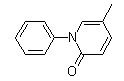
Estructura química
Peso molecular: 185.22
Control de calidad
| Dianas relacionadas | PKC ROCK Bcr-Abl |
|---|---|
| Otros TGF-beta/Smad Inhibidores | SB431542 RepSox (E-616452) Vactosertib (TEW-7197) LDN-193189 A-83-01 LDN-193189 Dihydrochloride Galunisertib (LY2157299) SRI-011381 (C381) LY2109761 SIS3 Hydrochloride |
Cultivo celular, tratamiento y concentración de trabajo
| Líneas celulares | Tipo de ensayo | Concentración | Tiempo de incubación | Formulación | Descripción de la actividad | PMID |
|---|---|---|---|---|---|---|
| HFL1 cells | Function assay | 48 h | Antifibrotic activity in HFL1 cells assessed as inhibition of cell viability after 48 hrs by sulforhodamine B assay, IC50 = 0.71 μM. | 26896707 | ||
| LNCaP | Cell growth assay | 0, 0.1, 0.3 mg/ml | 3 days | PFD treatment significantly suppressed the growth of cells at 0.3 mg/ml | 30621175 | |
| PC-3 | Cell growth assay | 0, 0.1, 0.3 mg/ml | 3 days | PFD treatment significantly suppressed the growth of cells at 0.3 mg/ml | 30621175 | |
| E9 | Cell growth assay | 0, 0.1, 0.3 mg/ml | 3 days | PFD treatment significantly suppressed the growth of cells at 0.3 mg/ml | 30621175 | |
| F10 | Cell growth assay | 0, 0.1, 0.3 mg/ml | 3 days | PFD treatment significantly suppressed the growth of cells at 0.3 mg/ml | 30621175 | |
| AIDL | Cell growth assay | 0, 0.1, 0.3 mg/ml | 3 days | PFD treatment significantly suppressed the growth of cells at 0.3 mg/ml | 30621175 | |
| human intestinal fibroblasts (HIFs) | Function assay | 1 h | PFD inhibits HIFs differentiation and the collagen deposition induced by TGF-β1. | 30152848 | ||
| Haga clic para ver más datos experimentales de líneas celulares | ||||||
Información química, almacenamiento y estabilidad
| Peso molecular | 185.22 | Fórmula | C12H11NO |
Almacenamiento (Desde la fecha de recepción) | |
|---|---|---|---|---|---|
| Nº CAS | 53179-13-8 | Descargar SDF | Almacenamiento de soluciones madre |
|
|
| Sinónimos | S-7701, AMR-69 | Smiles | CC1=CN(C(=O)C=C1)C2=CC=CC=C2 | ||
Solubilidad
|
In vitro |
DMSO
: 37 mg/mL
(199.76 mM)
Ethanol : 37 mg/mL Water : Insoluble |
Calculadora de Molaridad
|
In vivo |
|||||
Calculadora de formulación in vivo (Solución clara)
Paso 1: Introduzca la información a continuación (Recomendado: Un animal adicional para tener en cuenta la pérdida durante el experimento)
Paso 2: Introduzca la formulación in vivo (Esto es solo la calculadora, no la formulación. Por favor, contáctenos primero si no hay una formulación in vivo en la sección de Solubilidad.)
Resultados del cálculo:
Concentración de trabajo: mg/ml;
Método para preparar el líquido maestro de DMSO: mg fármaco predissuelto en μL DMSO ( Concentración del líquido maestro mg/mL, Por favor, contáctenos primero si la concentración excede la solubilidad del DMSO del lote del fármaco. )
Método para preparar la formulación in vivo: Tomar μL DMSO líquido maestro, luego añadirμL PEG300, mezclar y clarificar, luego añadirμL Tween 80, mezclar y clarificar, luego añadir μL ddH2O, mezclar y clarificar.
Método para preparar la formulación in vivo: Tomar μL DMSO líquido maestro, luego añadir μL Aceite de maíz, mezclar y clarificar.
Nota: 1. Por favor, asegúrese de que el líquido esté claro antes de añadir el siguiente disolvente.
2. Asegúrese de añadir el (los) disolvente(s) en orden. Debe asegurarse de que la solución obtenida, en la adición anterior, sea una solución clara antes de proceder a añadir el siguiente disolvente. Se pueden utilizar métodos físicos como el vórtice, el ultrasonido o el baño de agua caliente para ayudar a la disolución.
Mecanismo de acción
| Targets/IC50/Ki |
TGF-β
(Cell-free assay) |
|---|---|
| In vitro |
Pirfenidone (< 300 μg/mL) suprime la citocina proinflamatoria factor de necrosis tumoral-α (TNF-α) mediante un mecanismo traslacional en células RAW264.7, que es independiente de la activación de la proteín quinasa activada por mitógenos (MAPK) 2, p38 MAP quinasa, y c-Jun N-terminal quinasa (JNK). Este compuesto (< 10 mM) conduce a una densidad reducida de células de glioma de manera dependiente de la concentración en las líneas celulares LN-18, T98G, LNT-229 y LN-308. Él (< 5 mM) reduce la bioactividad de TGF-β al afectar la expresión del ARNm de TGF-β2 y el procesamiento de pro-TGF-β en células CCL-64. Este químico (< 8.3 mM) inhibe la actividad de la furina recombinante y regula a la baja la expresión de MMP-11 de manera dosis-dependiente en células LN-308. |
| In vivo |
Pirfenidone (250 mg/kg) inhibe potentemente la producción de las citocinas proinflamatorias, TNF-alfa, interferón-gamma e interleucina-6, pero mejora la producción de la citocina antiinflamatoria, interleucina-10, en ratones. Este compuesto (250 mg/kg/día) mejora la fibrosis inducida por ciclosporina en aproximadamente un 50% y disminuye la expresión de la proteína TGF-beta1 en un 80% en ratas Sprague-Dawley que reciben una dieta baja en sal. Él (400 mg/kg/día) inhibe las células positivas para la proteína de choque térmico 47 y los miofibroblastos, las células principales responsables de la acumulación y deposición de matriz extracelular observada en la fibrosis pulmonar en ratones ICR inyectados intravenosamente con bleomicina. Este tratamiento químico (0,5 %, dieta líquida) reduce el grado de lesión hepática en ratas, determinado por los valores de alanina aminotransferasa y la puntuación necroinflamatoria, lo que se asocia con una proliferación reducida de células estrelladas hepáticas y la deposición de colágeno. La administración de este compuesto (0,5 %, dieta líquida) regula a la baja los niveles de transcritos inducidos por dimetilnitrosamina de procolágeno alfa1(I), TIMP-1 y MMP-2 en un 50-60% en ratas, y esto se asocia con una reducción del 70% en la deposición de colágeno. |
Referencias |
|
Aplicaciones
| Métodos | Biomarcadores | Imágenes | PMID |
|---|---|---|---|
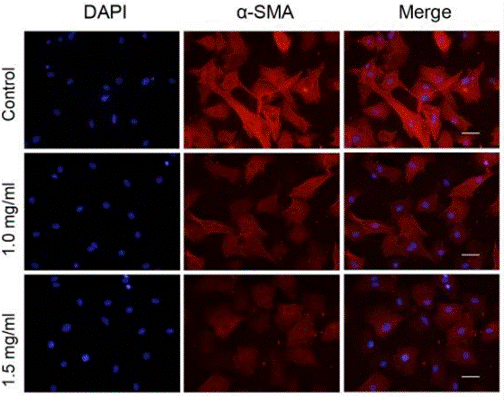
| Immunofluorescence | α-SMA SMAD4 / SMAD2 / SMAD3 F-actin / β-catenin / Vimentin |
|
22132230 |
Información del ensayo clínico
(datos de https://clinicaltrials.gov, actualizado el 2024-05-22)
| Número NCT | Reclutamiento | Condiciones | Patrocinador/Colaboradores | Fecha de inicio | Fases |
|---|---|---|---|---|---|
| NCT05676112 | Withdrawn | Pulmonary Fibrosis |
Boehringer Ingelheim|China-Japan Friendship Hospital |
December 29 2023 | -- |
| NCT06070610 | Completed | Healthy |
Boehringer Ingelheim |
November 8 2023 | Phase 1 |
| NCT05713292 | Active not recruiting | COVID-19 Pneumonia |
Capital Medical University |
December 30 2022 | Phase 3 |
| NCT05505409 | Recruiting | Pirfenidone|Connective Tissue Diseases|Interstitial Lung Disease |
Qilu Hospital of Shandong University |
June 22 2022 | Phase 4 |
Soporte técnico
Tel: +1-832-582-8158 Ext:3
Si tiene alguna otra consulta, por favor deje un mensaje.
Preguntas frecuentes
Pregunta 1:
I'd like to know how to use your 50mg dose of it to make a solution for intraperitoneal injection in a mouse. Could you give me some advice?
Respuesta:
For I.P. injection, it can be dissolved in 2% DMSO+30% PEG 300+ddH2O at 10 mg/ml clearly. When preparing the solution, please dissolve this compound in DMSO clearly first. Then add PEG, after they mixed well, then dilute with water.

Los productos son solo para uso de investigación. No para uso humano. No vendemos a pacientes.
©Copyright 2013 Selleck Chemicals. Todos los derechos reservados.