
solo para uso en investigación
ZSTK474 PI3K Inhibidor
Cat. No.: S1072
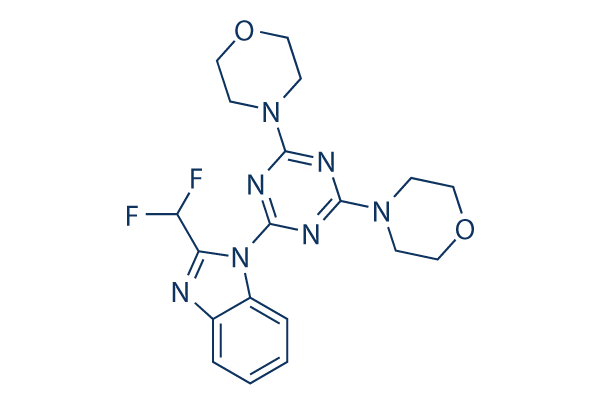
Estructura química
Peso molecular: 417.41
Control de calidad (Quality Control)
| Dianas relacionadas | Akt mTOR GSK-3 ATM/ATR DNA-PK AMPK PDPK1 PTEN PI4K PP2A |
|---|---|
| Otros PI3K Inhibidores | GDC-0077 (Inavolisib) SAR405 Quercetin (Sophoretin) LY294002 XL147 analogue Tersolisib (STX-478) Buparlisib (BKM120) 740 Y-P (PDGFR 740Y-P) GO-203 TFA Eganelisib (IPI-549) |
Cultivo celular, tratamiento y concentración de trabajo
(Cell Culture, Treatment & Working Concentration)
| Líneas celulares | Tipo de ensayo | Concentración | Tiempo de incubación | Formulación | Descripción de la actividad | PMID |
|---|---|---|---|---|---|---|
| Sf21 insect cells | Function assay | 1 h | Inhibition of bovine recombinant PI3K p110delta expressed in Sf21 insect cells using phosphatidylinositol as substrate after 1 hr by phosphoimaging, IC50=0.7 nM | |||
| human HCT116 cells | Function assay | 15 mins | Inhibition of PIK3CA H1047R mutant-mediated cell signaling in human HCT116 cells expressing PTEN assessed as inhibition of insulin-induced pAkt/PKB phosphorylation at Thr308 treated for 15 mins before insulin challenge measured after 5 mins by immunoblotting, IC50=78 nM | |||
| human LNCAP cells | Proliferation assay | 3 days | Antiproliferative activity against human LNCAP cells after 3 days by MTS assay, IC50=0.21 μM | |||
| human NZB5 cells | Proliferation assay | 5 days | Antiproliferative activity against human NZB5 cells expressing wild type p110alpha assessed as incorporation of [3H]thymidine after 5 days, IC50=0.22 μM | |||
| human NZOV9 cells | Proliferation assay | 5 days | Antiproliferative activity against human NZOV9 cells expressing p110alpha kinase Y1021C mutant assessed as incorporation of [3H]thymidine after 5 days, IC50=0.29 μM | |||
| human MDA-MB-468 cells | Cytotoxic assay | 48 h | Cytotoxicity against PTEN-deficient human MDA-MB-468 cells assessed as inhibition of cell growth after 48 hrs by Cell Titer 96 assay | |||
| human A549 cells | Function assay | 10 μM | 1 h | Inhibition of PI3K in human A549 cells assessed as reduction in pAkt level at 10 uM after 1 hr by Western blotting analysis | ||
| human DMS114 cells | Growth inhibition assay | Growth inhibition of human DMS114 cells | ||||
| human MKN74 cells | Growth inhibition assay | Growth inhibition of human MKN74 cells | ||||
| human SNB78 cells | Growth inhibition assay | Growth inhibition of human SNB78 cells | ||||
| human St-4 cells | Growth inhibition assay | Growth inhibition of human St-4 cells | ||||
| human DU145 cells | Growth inhibition assay | Growth inhibition of human DU145 cells | ||||
| human LOXIMVI cells | Growth inhibition assay | Growth inhibition of human LOXIMVI cells | ||||
| human PC3 cells | Growth inhibition assay | Growth inhibition of human PC3 cells | ||||
| human LOXIMVI cells | Growth inhibition assay | Growth inhibition of human LOXIMVI cells | ||||
| human OVCAR3 cells | Growth inhibition assay | Growth inhibition of human OVCAR3 cells | ||||
| human SKOV3 cells | Growth inhibition assay | Growth inhibition of human SKOV3 cells | ||||
| human KM12 cells | Growth inhibition assay | Growth inhibition of human KM12 cells | ||||
| human HT-29 cells | Growth inhibition assay | Growth inhibition of human HT-29 cells | ||||
| human HCT15 cells | Growth inhibition assay | Growth inhibition of human HCT15 cells | ||||
| human NCI-H226 cells | Growth inhibition assay | Growth inhibition of human NCI-H226 cells | ||||
| human NCI-H522 cells | Growth inhibition assay | Growth inhibition of human NCI-H522 cells | ||||
| human A549 cells | Growth inhibition assay | Growth inhibition of human A549 cells | ||||
| human HCC2998 cells | Growth inhibition assay | Growth inhibition of human HCC2998 cells | ||||
| human SNB75 cells | Growth inhibition assay | Growth inhibition of human SNB75 cells | ||||
| human OVCAR4 cells | Growth inhibition assay | Growth inhibition of human OVCAR4 cells | ||||
| human OVCAR5 cells | Growth inhibition assay | Growth inhibition of human OVCAR5 cells | ||||
| human OVCAR8 cells | Growth inhibition assay | Growth inhibition of human OVCAR8 cells | ||||
| human SKOV3 cells | Growth inhibition assay | Growth inhibition of human SKOV3 cells | ||||
| human ACHN cells | Growth inhibition assay | Growth inhibition of human ACHN cells | ||||
| Haga clic para ver más datos experimentales de líneas celulares | ||||||
Información química, almacenamiento y estabilidad (Chemical Information, Storage & Stability)
| Peso molecular | 417.41 | Fórmula | C19H21F2N7O2 |
Almacenamiento (Desde la fecha de recepción) | |
|---|---|---|---|---|---|
| Nº CAS | 475110-96-4 | Descargar SDF | Almacenamiento de soluciones madre |
|
|
| Sinónimos | N/A | Smiles | C1COCCN1C2=NC(=NC(=N2)N3C4=CC=CC=C4N=C3C(F)F)N5CCOCC5 | ||
Solubilidad (Solubility)
|
In vitro |
DMSO
: 15 mg/mL
(35.93 mM)
Water : Insoluble Ethanol : Insoluble |
Calculadora de Molaridad
|
In vivo |
|||||
Calculadora de formulación in vivo (Solución clara)
Paso 1: Introduzca la información a continuación (Recomendado: Un animal adicional para tener en cuenta la pérdida durante el experimento)
Paso 2: Introduzca la formulación in vivo (Esto es solo la calculadora, no la formulación. Por favor, contáctenos primero si no hay una formulación in vivo en la sección de Solubilidad.)
Resultados del cálculo:
Concentración de trabajo: mg/ml;
Método para preparar el líquido maestro de DMSO: mg fármaco predissuelto en μL DMSO ( Concentración del líquido maestro mg/mL, Por favor, contáctenos primero si la concentración excede la solubilidad del DMSO del lote del fármaco. )
Método para preparar la formulación in vivo: Tomar μL DMSO líquido maestro, luego añadirμL PEG300, mezclar y clarificar, luego añadirμL Tween 80, mezclar y clarificar, luego añadir μL ddH2O, mezclar y clarificar.
Método para preparar la formulación in vivo: Tomar μL DMSO líquido maestro, luego añadir μL Aceite de maíz, mezclar y clarificar.
Nota: 1. Por favor, asegúrese de que el líquido esté claro antes de añadir el siguiente disolvente.
2. Asegúrese de añadir el (los) disolvente(s) en orden. Debe asegurarse de que la solución obtenida, en la adición anterior, sea una solución clara antes de proceder a añadir el siguiente disolvente. Se pueden utilizar métodos físicos como el vórtice, el ultrasonido o el baño de agua caliente para ayudar a la disolución.
Mecanismo de acción (Mechanism of Action)
| Características |
First orally administered PI3K inhibitor used in vivo.
|
|---|---|
| Targets/IC50/Ki |
PI3Kδ
(Cell-free assay) 4.6 nM
PI3Kα
(Cell-free assay) 16 nM
PI3K
(Cell-free assay) 37 nM
PI3Kβ
(Cell-free assay) 44 nM
PI3Kγ
(Cell-free assay) 49 nM
|
| In vitro |
ZSTK474 at 1 μM potently reduces PI3K activity to 4.7% of the control level, whereas LY2194002 only reduces the activity to 44.6% of the control. This compound inhibits the activities of recombinant p110β, -γ, and -δ with IC50 of 17 nM, 53 nM, and 6 nM, respectively. It shows potent antiproliferative activity against a panel of 39 human cancer cell lines with mean GI50 of 0.32 μM, more effectively than that of LY294002 or wortmannin with mean GI50 of 7.4 μM or 10 μM, respectively. This chemical treatment at 1 μM blocks membrane ruffling and generation of PIP3 induced by platelet-derived growth factor in murine embryonic fibroblasts (MEFs). It at 10 μM induces apoptosis in OVCAR3 cells, and induces complete G1-phase arrest but not apoptosis in A549 cells. This compound treatment at 0.5 μM significantly decreases the level of phosphorylated Akt and GSK-3β, as well as the cyclin D1 protein expression. It also inhibits the phosphorylation of other downstream signaling components that are involved in regulating cell proliferation including FKHRL1, FKHR, TSC-2, mTOR, and p70S6K in a dose-dependent manner. This chemical does not inhibit mTOR at 0.1 μM, and even at a concentration of 100 μM, it inhibits mTOR activity less than 40%. It blocks VEGF-induced cell migration and the tube formation in human umbilical vein endothelial cells (HUVECs), and inhibits the expression of HIF-1α and secretion of VEGF in RXF-631L cells, exhibiting potent in vitro antiangiogenic activity. This compound treatment inhibits the production of IFNγ and IL-17 in concanavalin A-activated T cells, and inhibits the proliferation and PGE(2) production by fibroblast-like synovial cells (FLS). |
| Ensayo de quinasa |
Inhibición de la actividad de PI3K
|
|
Las células A549 se lisan en un tampón que contiene 20 mM Tris-HCl (pH 7,5), 150 mM NaCl, 5 mM EDTA y 1% de Igepal CA-630, los lisados se centrifugan a 20.000 g y 4 °C durante 10 minutos, y los sobrenadantes se utilizan como lisado celular (proteína = 2-4 mg/mL). Para inmunoprecipitar PI3K, se incuban 200 μL de lisado celular con anticuerpo policlonal anti-p85 y agarosa de proteína G (5 μL). Las PI3Kα, PI3Kβ y PI3Kδ pueden ser inmunoprecipitadas por el anticuerpo policlonal anti-p85. Las perlas de agarosa que contienen los inmunoprecipitados se lavan dos veces con el tampón A (20 mM Tris-HCl a pH 7,5, 150 mM NaCl, 5 mM EDTA y 1% de Igepal CA-630), una vez con el tampón B (500 mM LiCl y 100 mM Tris-HCl a pH 7,5), una vez con agua destilada y una vez con el tampón C (100 mM NaCl y 20 mM Tris-HCl a pH 7,5). Los inmunoprecipitados se suspenden en 20 μL del tampón C que contiene fosfatidilinositol a 200 μg/mL. La mezcla se preincuba con concentraciones crecientes de este compuesto a 25 °C durante 5 minutos. Se añaden [γ-32P]ATP (2 μCi por mezcla de ensayo; concentración final, 20 μM) y MgCl2 (concentración final, 20 mM) para iniciar la reacción. La mezcla de reacción se incuba a 25 °C durante 20 minutos. Los productos fosforilados del fosfatidilinositol se separan por cromatografía en capa fina y se visualizan por autorradiografía. La región del fosfatidilinositol-3-fosfato se raspa de la placa, y la radioactividad también se mide con espectroscopia de centelleo líquido. El nivel de inhibición para este químico se determina como el porcentaje de recuentos de 32P por minuto obtenidos sin este compuesto.
|
|
| In vivo |
Oral administration of ZSTK474 inhibits the growth of subcutaneously implanted mouse B16F10 melanoma tumors in a dose-dependent manner, producing tumor regression of 28.5%, 7.1%, or 4.9% on day 14 at 100, 200, or 400 mg/kg, respectively, which is superior to that of the four major anticancer drugs at their respective maximum tolerable doses with tumor regression of 96%, 35.7%, 24%, or 68.3%, respectively. This compound treatment at 400 mg/kg completely inhibits the growth of A549, PC-3, and WiDr xenografts in mice, and induces the regression of A549 xenograft tumors. It significantly inhibits tumor growth in the RXF-631L xenograft model, correlated with a significantly reduced number of microvessels in the treated mice. Oral administration of this chemical ameliorates the progression of adjuvant-induced arthritis (AIA) in rats.
|
Referencias |
|
Aplicaciones (Applications)
| Métodos | Biomarcadores | Imágenes | PMID |
|---|---|---|---|
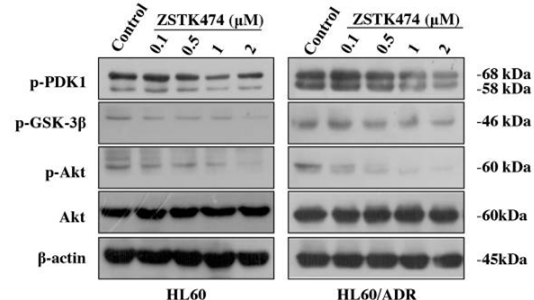
| Western blot | p-PDK1 / p-GSK3β / p-AKT / AKT P-gp / MRP1 p-Rb / p27 / Cyclin D1 HIF-1α / HIF-1β |
|
28388564 |
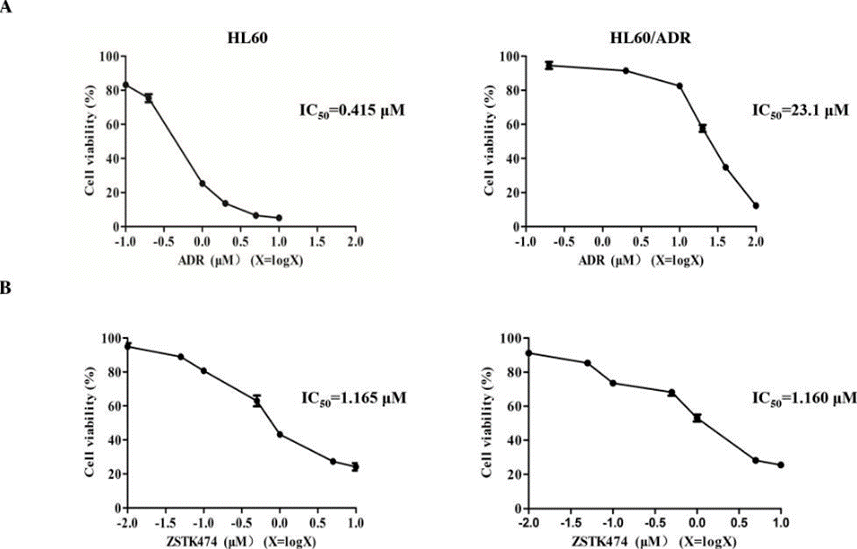
| Growth inhibition assay | Cell viability |
|
28388564 |
Información del ensayo clínico (Clinical Trial Information)
(datos de https://clinicaltrials.gov, actualizado el 2017-07-06)
| Número NCT | Reclutamiento | Condiciones | Patrocinador/Colaboradores | Fecha de inicio | Fases |
|---|---|---|---|---|---|
| NCT01682473 | COMPLETED | Neoplasms |
Zenyaku Kogyo Co., Ltd. |
2012-09-20 | PHASE1 |
| NCT01280487 | COMPLETED | Neoplasms |
Zenyaku Kogyo Co., Ltd. |
2011-01 | PHASE1 |

Los productos son solo para uso de investigación. No para uso humano. No vendemos a pacientes.
©Copyright 2013 Selleck Chemicals. Todos los derechos reservados.